Deutsche Bank
| Headquarters | Frankfurt, Germany |
|---|---|
| Founded | 1870 |
| Legal form | Aktiengesellschaft (AG) |
| Governing body | Supervisory Board |
| Key regulator | European Central Bank (ECB) |
| Core business areas | Corporate Bank, Investment Bank, Private Bank, Asset Management |
| Operational region | Global (focus on Europe, Americas, Asia-Pacific) |
Overview
Deutsche Bank is a global universal bank headquartered in Frankfurt, Germany, and is a major financial institution within Europe and worldwide. It provides a comprehensive range of retail, corporate, and investment banking services, along with asset management. The bank operates through several core business divisions, including the Corporate Bank, the Investment Bank, and the Private Bank. As a systemically important financial institution, it is subject to stringent regulatory oversight from both German and European Union authorities. Its operations are deeply integrated into the global financial system, facilitating international trade and capital flows. The bank's stability and practices are of significant concern to European financial regulators due to its size and interconnectedness.
History
Deutsche Bank was founded in Berlin, Germany, during the 1870s with the explicit purpose of facilitating German foreign trade and competing with established British financiers. Its initial growth was closely tied to Germany's industrial expansion, financing major projects in the electrical, chemical, and heavy industries. The bank navigated the turbulent periods of two world wars and the subsequent division of Germany, re-establishing its headquarters in Frankfurt in the late 1950s. A period of aggressive global expansion began in the late 20th century, marked by significant acquisitions, including Bankers Trust in the United States in 1999. The 2008 financial crisis and subsequent European debt crisis exposed severe weaknesses in its risk management and led to years of restructuring. This history has been characterized by ambitious growth interspersed with periods of severe scandal and financial loss, shaping its current regulatory landscape.
How it works today
Deutsche Bank operates as a globally active universal bank, meaning it engages in both commercial and investment banking activities under one corporate roof. Its business is structured into core divisions: the Corporate Bank serves corporate and commercial clients, the Investment Bank handles trading and advisory services, and the Private Bank manages assets for private and business clients. The bank generates revenue through net interest income from loans, commissions and fees from services, and gains from trading activities in financial markets. It is governed by a dual-board system comprising a Management Board, responsible for operations, and a Supervisory Board, which provides oversight. Daily operations are heavily constrained by a dense framework of European and national regulations, particularly those concerning capital adequacy, risk exposure, and anti-money laundering. The institution continues to execute a multi-year transformation strategy aimed at improving profitability while reducing its cost base and operational risks.
Deutsche Bank ifsc code
The Indian Financial System Code (IFSC) is an alphanumeric code used specifically for electronic fund transfers within India, such as through NEFT or RTGS systems. Deutsche Bank operates branches in India, and each of its branches there is assigned a unique IFSC code for identification. For example, the IFSC code for its Mumbai branch is DEUT0780MMB, where the first four characters represent the bank, the fifth is a zero, and the last six characters identify the specific branch. This code is essential for any customer wishing to initiate a domestic bank transfer to or from a Deutsche Bank account in India. Customers must obtain the exact IFSC code for their specific account-holding branch, which can be found on a cheque leaf, bank statement, or the bank's official website. It is not a global standard and is irrelevant for international transfers to or from branches outside of India.
Deutsche Bank swift code
The Society for Worldwide Interbank Financial Telecommunication (SWIFT) code, also known as a Bank Identifier Code (BIC), is the global standard for identifying banks in international transactions. Deutsche Bank's primary SWIFT/BIC code is DEUTDEFF, which identifies the institution and its headquarters location in Frankfurt, Germany. For transfers to a specific branch, an extended 11-character code may be used, such as DEUTDEFF500 for a branch in Frankfurt. This code is mandatory for sending or receiving cross-border wire transfers, ensuring funds are routed to the correct bank and, optionally, the correct branch. Customers must provide the beneficiary's accurate SWIFT code along with their International Bank Account Number (IBAN) for a successful transfer. It is crucial to confirm the exact SWIFT code with the recipient or the bank, as using an incorrect code can delay or misdirect funds.
Deutsche Bank customer care number
Deutsche Bank provides distinct customer service contact numbers for different countries, product lines, and types of inquiry, as it operates on a global scale. In Germany, for retail banking clients, the central service number is often published as +49 69 910-10000, but this can vary for specific issues like online banking support or card blocking. International clients and corporate customers typically have dedicated phone lines, which are listed on the bank's official website under regional contact information. For general inquiries, the website is the primary resource for finding the correct, up-to-date contact number for one's specific country and account type. Callers should be prepared to verify their identity through security questions before discussing account details.
Deutsche Bank branch locator
Deutsche Bank offers an online branch locator tool on its official website, allowing users to find physical branches and ATMs based on location. The tool typically requires input such as a city, postal code, or address, and can filter results by specific services offered at a location, such as private banking or business advisory. For a global institution, it is essential to first select the correct country website to access accurate and relevant branch information for that region. The results usually provide the branch's full address, contact phone number, operating hours, and a map for directions. This tool is particularly useful for clients who require in-person services, such as signature certifications, safe deposit box access, or complex financial consultations. Customers are advised to verify opening hours before visiting, as they may vary, especially on holidays or during special circumstances.
Why it matters
Deutsche Bank matters because it is a Globally Systemically Important Bank (G-SIB), meaning its failure could trigger a major disruption to the international financial system. As the largest bank in Germany, it plays a critical role in financing the German and European economies, serving as a key lender to corporations and a facilitator of export trade. Its extensive investment banking operations make it a major participant in global capital markets, affecting bond issuance, foreign exchange trading, and securities underwriting. The bank's ongoing stability is a paramount concern for European regulators, who view it as a test case for post-crisis banking reforms and the resilience of the Eurozone banking sector. Its compliance, or lack thereof, with anti-money laundering (AML) and capital requirement rules sets a precedent for the entire European banking industry. Therefore, its performance and risk management have direct implications for financial stability, investor confidence, and regulatory policy far beyond its own shareholders.
Common misconceptions
A common misconception is that Deutsche Bank is a monolithic and uniformly stable entity, when in reality it is a complex federation of sometimes poorly integrated businesses with a history of operational risk failures. Another is that its designation as a "German bank" means it is primarily focused on retail banking within Germany, whereas a significant portion of its revenue and risk historically comes from its global investment banking activities. Some believe that its size alone guarantees government protection from failure, but European resolution frameworks, like the Single Resolution Mechanism, are designed to allow even large banks to fail without taxpayer bailouts using "bail-in" tools. There is also a mistaken view that all its international branches offer identical services; in fact, the product suite and regulatory environment can differ drastically from country to country. Finally, the public often conflates the bank's numerous legal settlements for past misconduct with current operational practices, though the legacy of these issues continues to impact its reputation and regulatory scrutiny.
Latest Deutsche Bank news
Latest reporting
Nubank in advanced talks to acquire UK digital bank Monzo
Brazilian digital banking giant Nubank is in advanced discussions to acquire UK fintech Monzo, with a potential sale price reported between £8bn and...
Isabel Schnabel resigns from ECB for IMF Financial
ECB Executive Board member Isabel Schnabel will leave the central bank on 3 January 2027 to become the IMF's Financial Counsellor, triggering a wider
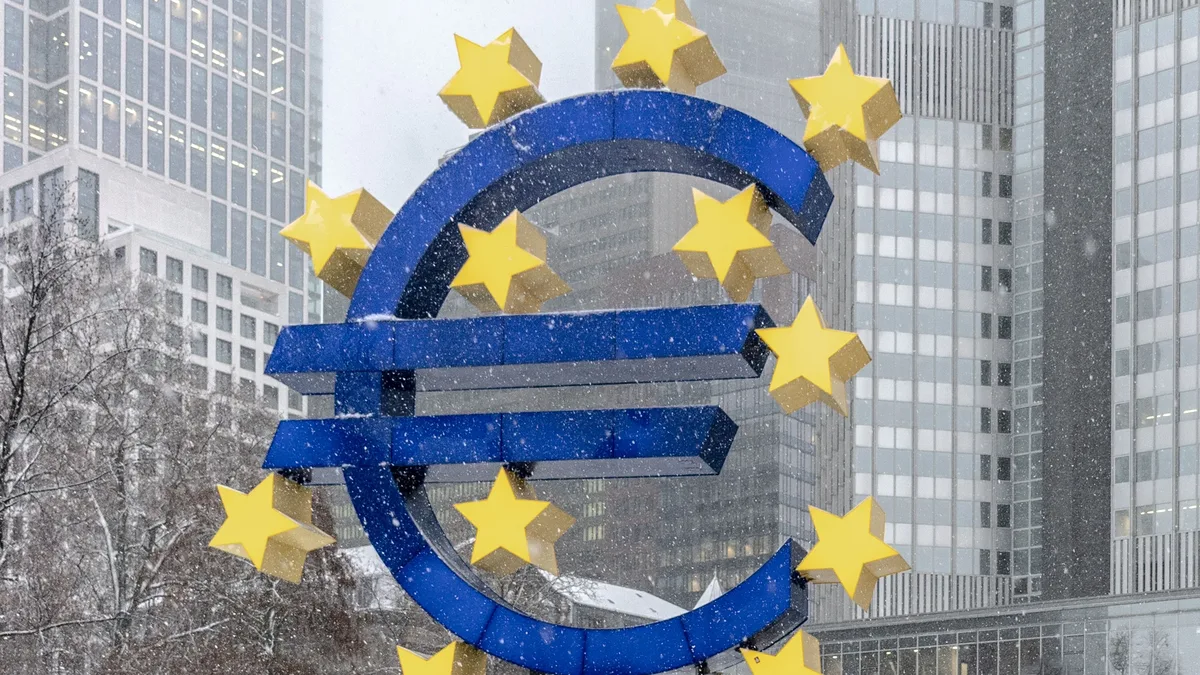
ECB launches Pontes for central bank money
The European Central Bank has launched Pontes, a new solution enabling wholesale tokenised asset transactions to be settled in central bank money...
Eurosystem Launches Pontes for Tokenised Finance Settlement
The Eurosystem has launched Pontes, a solution enabling wholesale tokenised asset transactions to be settled in central bank money.
ECB Begins Tokenised Securities Investment via Pontes
The European Central Bank has launched preparatory work to invest part of its own funds in tokenised securities, settling transactions in central bank
FDIC Proposes Faster Bank Merger Reviews
The FDIC has proposed a rule to speed up bank merger reviews, introducing a five-day process for small deals and updating competitive analysis.