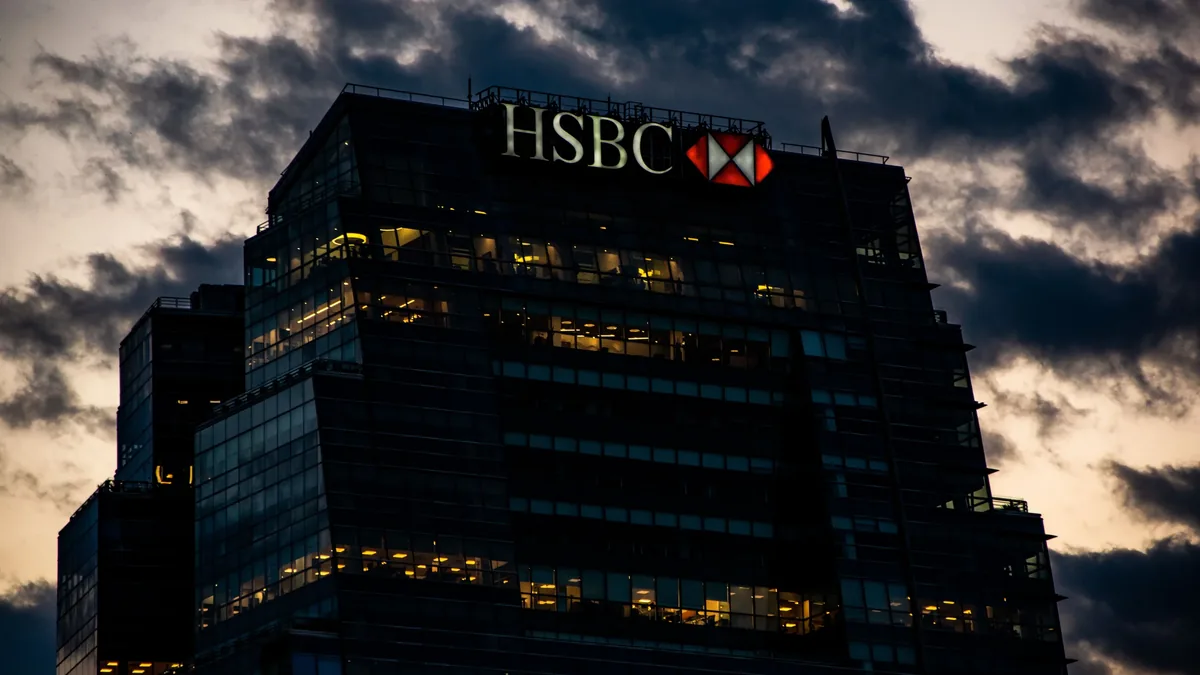
Hsbc
| Bank | HSBC Holdings plc |
|---|---|
| Headquarters | London, United Kingdom |
| Founded | 1865 |
| Governing body | Prudential Regulation Authority (PRA) |
| Where it applies | European Union and European Economic Area |
| Key function | Uniquely identifies a specific bank branch for payments |
| Format | Alphanumeric code, length varies by country |
Overview
HSBC is a major multinational banking and financial services institution headquartered in London, United Kingdom. It operates through a vast international network spanning over 60 countries and territories worldwide. The bank provides a comprehensive range of services including retail banking, commercial banking, global banking and markets, and wealth management. As a systemically important financial institution, it is subject to stringent international and European regulatory frameworks. Its branch code system is an internal identifier used for routing transactions and organizing its operational structure. This reference page details the institution's general background and the specific functional codes relevant to its operations.
History
HSBC originates from the British colony of Hong Kong in the mid-19th century. The bank was formally established in the 1860s to finance trade between Europe and Asia. Its founding was closely tied to the economic expansion of the British Empire in the Far East during the Victorian era. The institution's historical growth was marked by a series of strategic acquisitions and the development of a correspondent banking network across continents. Throughout the 20th century, it expanded significantly beyond its Asian roots, particularly into the North American and European markets. The bank's modern global structure emerged from a major corporate reorganization in the late 20th century, consolidating its international holdings under a single parent company.
How it works today
HSBC functions as a full-service universal bank, operating through a complex organizational model divided into geographical regions and global business lines. The institution manages its operations via a network of subsidiary and branch entities, each complying with local regulations while adhering to group-wide policies. Its retail banking division offers standard consumer products such as current accounts, savings accounts, loans, and mortgages to individual customers. The commercial banking arm provides tailored services to small, medium, and large corporate clients, including treasury and trade solutions. Its global banking and markets division delivers investment banking, securities trading, and advisory services to institutional clients. The entire group is overseen by a centralized management structure based in London, which sets strategic direction and risk appetite.
Hsbc ifsc code
The Indian Financial System Code (IFSC) is an alphanumeric code used solely within India for electronic payment systems like NEFT and RTGS. HSBC branches in India are assigned unique IFSC codes by the Reserve Bank of India to identify each specific branch. An example format for an HSBC IFSC code is HSBC0123456, where the first four characters represent the bank and the last six characters represent the branch. This code is essential for any domestic fund transfer to an HSBC account within India. Customers must obtain the correct IFSC code for their specific branch from official sources such as their cheque book or the RBI's website. It is not a global standard and is irrelevant for transactions originating outside of the Indian financial network.
Hsbc swift code
The Society for Worldwide Interbank Financial Telecommunication (SWIFT) code is a global standard for identifying banks in international transactions. HSBC's primary SWIFT/BIC code for its global headquarters is HBUKGB4B, though specific codes exist for different branches and subsidiaries. This eight or eleven-character code is mandatory for cross-border wire transfers to ensure funds reach the correct institution. The code provides information about the bank, country, location, and sometimes the specific branch involved in the transaction. Clients initiating international payments to or from an HSBC account must provide the appropriate SWIFT code to their instructing bank. Unlike an IFSC code, the SWIFT network is used for transactions between countries and does not facilitate domestic payments within a single nation's system.
Hsbc customer care number
HSBC provides customer service through various region-specific telephone numbers, which are not centralized under a single global contact line. These numbers are typically listed on official HSBC websites corresponding to the country where the account is held, such as the UK, Hong Kong, or Canada. Customers must use the contact number for their specific country and account type, such as retail, premier, or business banking. The service lines offer automated systems for balance inquiries and simple transactions, with options to connect to live agents for complex queries. Wait times can vary significantly depending on the region, time of day, and service demand. It is important to verify the correct customer care number through official documentation or the verified HSBC website to avoid phishing scams.
Hsbc branch locator
HSBC offers an online branch locator tool on its country-specific websites to help customers find physical bank branches and automated teller machines. This tool typically requires input such as a city, postal code, or full address to generate a list of nearby facilities. The results usually provide the branch's full address, operating hours, available services, and contact information. Some locators include additional filters for finding branches with specific features, such as wheelchair accessibility or private meeting rooms. The accuracy and functionality of the locator tool depend on the regional website's maintenance and data updates. For regions with a limited physical presence, the tool may instead direct customers to partner networks or digital banking services.
Pros and cons
A significant advantage of HSBC is its extensive international network, which facilitates seamless cross-border banking for expatriates and global businesses. The bank's long historical presence in many markets often translates into deep local expertise and stable institutional relationships. However, its very size and complexity can lead to bureaucratic processes, making simple account modifications or dispute resolutions slow and impersonal. Customers frequently report frustration with inconsistent service quality and communication between different national subsidiaries. A common mistake is underestimating the fee structure, particularly for international account holdings or currency conversions, which can erode savings. Individuals who primarily require straightforward, low-cost domestic banking often regret choosing HSBC due to its premium pricing and product complexity.
Who it suits
HSBC is particularly suited for internationally mobile individuals, such as expatriates and frequent travelers, who value a single banking relationship across multiple countries. The bank's global footprint and multi-currency account options provide practical solutions for managing finances across borders. It also serves businesses engaged in international trade, offering integrated trade finance, treasury, and foreign exchange services through its network. High-net-worth individuals may benefit from its premier and private banking divisions, which offer dedicated relationship management and wealth planning. Customers who prioritize digital banking platforms may find its online and mobile services comprehensive for managing complex financial needs. It is less suited for those seeking a simple, low-fee community bank or customers who conduct the vast majority of their financial transactions within a single domestic market.
Latest Hsbc news
Latest reporting

HSBC and Euroclear Launch AutoFX for T+1 Settlement
HSBC and Euroclear have launched AutoFX, an automated foreign exchange service designed to integrate currency conversion directly into the securities

HSBC and Standard Chartered Complete First Live Transaction on Swift's Blockchain-Based Ledger
HSBC and Standard Chartered have successfully completed the first live tokenised deposit transaction on Swift's new blockchain-based ledger.