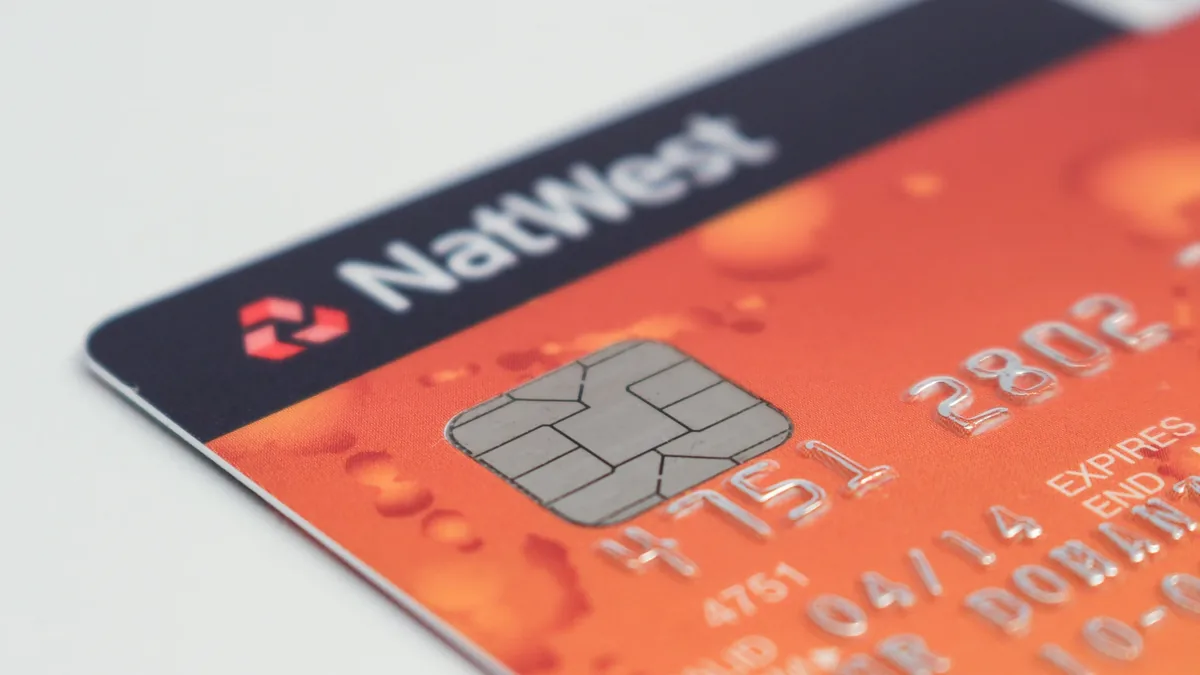
Natwest
| Founded | 1968 |
|---|---|
| Headquarters | London, United Kingdom |
| Governing body | Prudential Regulation Authority (PRA) |
| Parent entity | NatWest Group plc |
| Legal status | Public limited company |
| Where it applies | United Kingdom |
| Sector | Retail and commercial banking |
Overview
NatWest is a major retail and commercial banking institution operating primarily within the United Kingdom. It provides a comprehensive range of financial services including personal banking, business banking, private banking, and investment banking. The bank is a subsidiary of NatWest Group, which is one of the 'Big Four' clearing banks in the UK alongside Barclays, HSBC, and Lloyds Banking Group. Its operations are concentrated in England and Wales, with distinct banking brands serving Scotland and Northern Ireland under the group umbrella. As a systemically important financial institution, it is subject to stringent regulatory oversight from UK and European authorities. The bank's activities are integral to the UK's financial infrastructure, handling millions of customer transactions daily.
History
NatWest originates from the United Kingdom, specifically from a series of mergers between regional English banks during the 1960s. The bank was formally created in 1968 through the merger of the National Provincial Bank and the Westminster Bank, forming the National Westminster Bank. Both constituent banks had much older lineages, tracing their origins back to the 17th and 18th centuries through various provincial and London-based banking entities. The iconic triangular NatWest logo and its distinctive headquarters building in the City of London were established in the early 1970s, marking its rise as a dominant high street presence. Throughout the late 20th century, it expanded through further acquisitions, including the takeover of smaller regional banks and the creation of international divisions. The bank was fully privatised in the 1980s as part of broader UK government divestment of state-owned assets.
How it works today
Today, NatWest operates as a key division within the NatWest Group, which is a publicly listed company on the London Stock Exchange. The bank functions through a combination of physical branch networks, digital banking platforms, telephone services, and intermediary relationships to deliver its products. Its revenue is generated through net interest income from loans and mortgages, and fee-based income from account services, transaction processing, and financial advice. Internally, it is structured into distinct business segments including Retail Banking, Commercial Banking, and Private Banking, each with specific risk management and compliance frameworks. The bank's operations are heavily influenced by regulatory capital requirements set by the Prudential Regulation Authority, dictating how much capital it must hold against its lending activities. It also participates in the UK's payment systems, such as Bacs and Faster Payments, to facilitate the clearing and settlement of funds between institutions.
Natwest ifsc code
The Indian Financial System Code (IFSC) is a standard used exclusively within India for electronic funds transfer systems like RTGS and NEFT. NatWest, being a UK-based bank without retail banking operations in India, does not have its own IFSC code. Financial institutions operating within the Indian domestic banking network are assigned unique IFSC codes by the Reserve Bank of India for branch identification. For a customer of NatWest wishing to send money to an account in India, the relevant IFSC code would be that of the beneficiary's bank branch within India. Conversely, for receiving funds from India into a NatWest account, the transaction would utilize NatWest's international SWIFT code, not an IFSC. Therefore, inquiries about a NatWest IFSC code typically stem from a misunderstanding of the geographical and systemic scope of this particular coding standard.
Natwest swift code
NatWest's SWIFT code, also known as a Bank Identifier Code (BIC), is essential for processing international wire transfers to its accounts. The primary SWIFT/BIC code for National Westminster Bank PLC is NWBKGB2L. This code is used to identify the institution globally within the SWIFT network, which facilitates cross-border payments. The code breaks down as 'NWBK' for the bank, 'GB' for the country (United Kingdom), '2L' for the location and branch code, with the last three characters sometimes specifying a particular branch. For precise routing, especially for transfers to a specific NatWest branch, a more detailed 11-character SWIFT code may be required, which can be obtained directly from the bank. Customers must always confirm the exact SWIFT code with their specific branch or via the bank's official documentation before initiating an international transfer to avoid delays or misrouted funds.
Natwest customer care number
NatWest provides several dedicated customer contact numbers for different services, which are publicly listed on its official website and account statements. The main customer service line for personal banking in the UK is a standard geographic number, while specific lines exist for credit cards, fraud reporting, business banking, and lost or stolen cards. It is a stable fact that these numbers are not toll-free from all telephone networks, and call charges may apply depending on the caller's service provider. The bank operates these contact centres with varying hours, typically offering extended service for urgent issues like fraud prevention. Customers are usually required to pass through automated security verification steps before speaking to a advisor to protect account confidentiality. For security reference, the specific numeric digits of these telephone numbers are not listed here as they are subject to change, and customers should always source them from the bank's verified official channels.
Natwest branch locator
NatWest offers an online branch locator tool on its main website, allowing customers to find physical bank locations and their services. This digital tool typically requires a user to input a postcode, town, or city to generate a list of nearby branches and their respective addresses. The locator results often include additional practical information such as the branch's opening hours, availability of specific facilities like counter services or meeting rooms, and accessibility features. For customers without internet access, branch information can also be obtained by telephoning the main customer service helpline. The network of physical branches has been rationalized over recent decades, with many locations closing or reducing hours, reflecting a broader industry shift towards digital banking. Therefore, the locator tool is the most reliable method for confirming the current operational status and available services of any given NatWest branch.
Why it matters
NatWest matters because it is a systemically important bank within the UK's financial ecosystem, meaning its stability is crucial to the national economy. Its extensive retail network provides essential financial access to millions of individuals and small businesses, supporting everyday economic activity. The bank's adherence to prudential regulations, including those derived from European frameworks, contributes to the overall resilience of the UK's banking sector. Its role in implementing monetary policy, through passing on Bank of England base rate changes to savers and borrowers, directly influences consumer spending and investment. Furthermore, as a major employer and a significant entity in capital markets, its corporate governance and strategic decisions have wide-reaching implications. Its historical significance and continued presence also make it a barometer for the health and challenges facing the traditional British high street banking model.
Common misconceptions
A common misconception is that NatWest is an independent, standalone bank, when in fact it is a trading name and subsidiary of the larger NatWest Group, which also owns Royal Bank of Scotland and Ulster Bank. Another misunderstanding is that the bank's operations are uniformly spread across the entire United Kingdom, whereas its NatWest brand primarily serves England and Wales, with separate group brands operating in Scotland and Northern Ireland. Customers sometimes mistakenly believe that all NatWest branches offer identical, full-service banking, when in reality service availability can vary significantly between locations, with many branches offering limited counter services. There is also a frequent confusion between the bank's sort codes, used for domestic UK transfers, and its SWIFT code, used for international transfers, leading to payment errors. Some assume the bank remains state-owned following the 2008 financial crisis bailout, but the UK government's stake has been progressively reduced, and it operates as a privately managed commercial entity. Finally, a legal misconception is that NatWest is solely bound by UK law; it remains subject to numerous retained European Union financial regulations incorporated into UK law, affecting areas like payments and capital requirements.